The global oil sludge treatment market is undergoing a structural shift in technical routes. Rapid growth in the market share of pyrolysis technology, policy-driven expansion of the Chinese market, and incremental demand from the Middle East and Southeast Asia together constitute the most definitive growth logic for the oil sludge pyrolysis industry over the next three to five years.
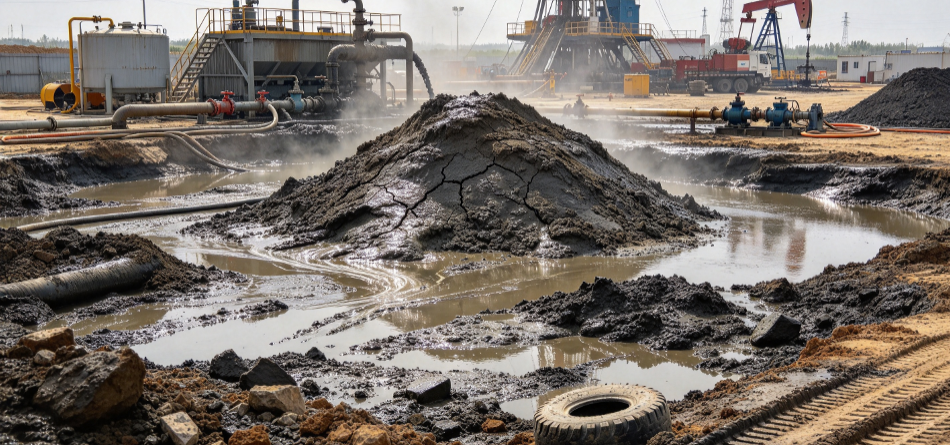
Global Market: USD 7.24 Billion Base Market with 9.8% Annual Growth Rate
In 2025, the global oil-bearing sludge treatment market reached USD 7.24 billion, rising by 9.8% year-on-year, as the industry enters a phase of rapid expansion. This growth rate is markedly higher than the concurrent global GDP growth rate, reflecting the dual driving forces of tightening environmental regulations and growing demand for legacy oil sludge remediation.
From a technical-route perspective, thermochemical washing and pyrolysis together accounted for 62.4% of global installed treatment capacity in 2025. Thanks to its high resource-recovery rate (carbon-residue oil content below 0.3%), pyrolysis has become the mainstream choice for new-build projects. Mechanical separation and solvent extraction represented 18.7% and 11.2% respectively. Pilot-scale microbial remediation projects at Chinese oilfields including Changqing and Daqing have achieved an annual treatment volume exceeding 150,000 tonnes, demonstrating its low energy consumption advantage, yet it still lags behind pyrolysis in terms of treatment efficiency and large-scale deployment capability.
The sharp rise in pyrolysis market share merits special attention. According to GEP Research estimates, the market share of pyrolysis technology jumped from 19.3% in 2021 to 33.1% in 2025, representing a gain of more than 70% within four years and making pyrolysis the fastest-growing technical pathway. This change stems from sustained technical breakthroughs of pyrolysis in two core indicators: resource-recovery efficiency and pollutant control performance.
In terms of treatment gaps, global annual oil-bearing sludge output hit 126 million tonnes in 2025. The Middle East, North America and China together contributed 81.6% of total generation, while the unaddressed treatment gap remained as high as 34.5%. This means over 43 million tonnes of oil-bearing sludge fails to receive compliant disposal every year. The combination of accumulated legacy stockpiles and newly generated waste creates sustained demand growth for treatment equipment and services. In terms of life-cycle stage, the industry as a whole is transitioning from the growth phase toward maturity. Thermal phase separation technology has entered the mature stage, while bioremediation and plasma gasification remain in the commercial introduction phase.
China Market: USD 1.86 Billion Regional Characteristics and Structural Contradictions
As the world's largest crude-oil-processing and oil sludge-generating country, China's oil-bearing sludge treatment market surpassed USD 1.86 billion in 2025, accounting for 25.7% of the global total. It is projected to reach USD 3.42 billion by 2030, with a compound annual growth rate of 12.9%. This growth rate is well above the global average, driven by three major factors: stricter environmental regulations, additional oil sludge output brought by secondary development of mature oilfields, and accelerated commercialisation of technologies including pyrolysis and bioremediation.
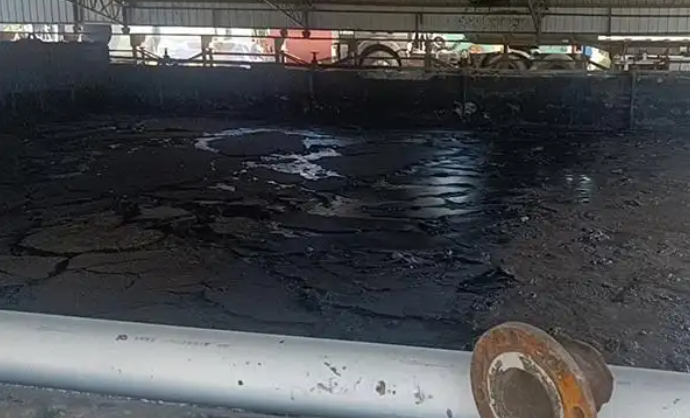
High regional concentration stands out as a notable feature of the Chinese market. In 2025, Shandong, Heilongjiang and Xinjiang together contributed 52.4% of national treatment volume. Among them, Dongying City in Shandong built six centralized oil sludge treatment plants under public-private-partnership models, with a combined annual processing capacity of 980,000 tonnes. This "centralised treatment within oil-producing zones" pattern means site-selection logic for pyrolysis projects depends heavily on the geographical density of upstream oilfields and cost-effective transportation radius.
Segmented demand structure also deserves attention. In 2025, in-situ oil sludge from oilfields (drilling cuttings and pit-fall oil sludge) made up 51.7% of total treatment demand; oil-bearing sludge from refining processes accounted for 34.3%; and storage-tank bottom sludge represented 14.0%. Oil sludge generated from shale-oil development registered the fastest-growing demand, rising 22.5% year-on-year in 2025, mainly concentrated in the Permian Basin of the United States and the Sichuan-Chongqing region of China. For pyrolysis operators, incremental oil sludge output from Sichuan-Chongqing shale-gas blocks constitutes a high-potential segment for early market positioning.
Nevertheless, the Chinese market faces obvious structural contradictions. Domestic enterprises have realised import substitution in mid-to-low-temperature pyrolysis and supercritical water oxidation; domestic-manufactured equipment captured a 68.4% market share in 2025. Even so, high-end membrane-separation and ionic-liquid extraction equipment still relies on imports. This indicates domestic supply is available for core pyrolysis hardware, yet technical dependency risks persist in downstream deep-product refining and fine-separation processes.
Regional Divergence: Distinct Growth Logic for the Middle East and North America
Regional divergence across the global oil sludge market reflects differences in oilfield life cycles, development modes and stringency of environmental supervision among oil-producing regions.
The Middle East represents the fastest-growing regional market at present. In 2025, its oil-bearing sludge treatment market stood at USD 1.68 billion with a compound annual growth rate of 13.1%. Aging oilfields constitute the core driving force: numerous Middle East oilfields have entered mid-to-late-stage production, water cut in produced fluid keeps rising, and tank-bottom sludge plus oil sludge from produced-water treatment consequently surge. Saudi Arabia and the United Arab Emirates are rapidly deploying mobile pyrolysis units to handle geographically scattered oil sludge generation points.
North America follows a different growth narrative. Its oil-bearing sludge treatment market reached USD 2.13 billion in 2025. Driven by new EPA emission standards, around 4.2 million tonnes per annum of new treatment capacity came online during 2025–2026. Sustained active shale-oil development underpins local demand; onshore drilling-waste management took a 62% market share in North America in 2024. Unlike the Middle East, the compliant disposal rate in North America has exceeded 85%. Competition focus is shifting away from "whether disposal is technically feasible" toward "whether treatment costs can be lowered."
Although the European market totals only USD 0.97 billion, it shows the most urgent demand for technical upgrading. The amended Industrial Emissions Directive enforced across the EU in January 2026 classifies oil-bearing sludge as high-risk waste and mandates residual oil content below 0.5% for treated residues, directly pushing R&D investment in combined pyrolysis-stabilisation technologies upward by 32.5%.
Equipment Exports: Structural Opportunities for Chinese Enterprises
China's oil sludge treatment equipment manufacturing sector is evolving from domestic import substitution toward global supply. In 2025, new order value for global pyrolysis-equipment manufacturers rose 41.7% year-on-year, and Chinese equipment exports accounted for 31.2% of total global trade volume for oil-bearing sludge treatment equipment. Note: "31.2%" refers to the export revenue of pyrolysis-equipment manufacturers as a percentage of total global trade volume of oil-bearing sludge treatment equipment.
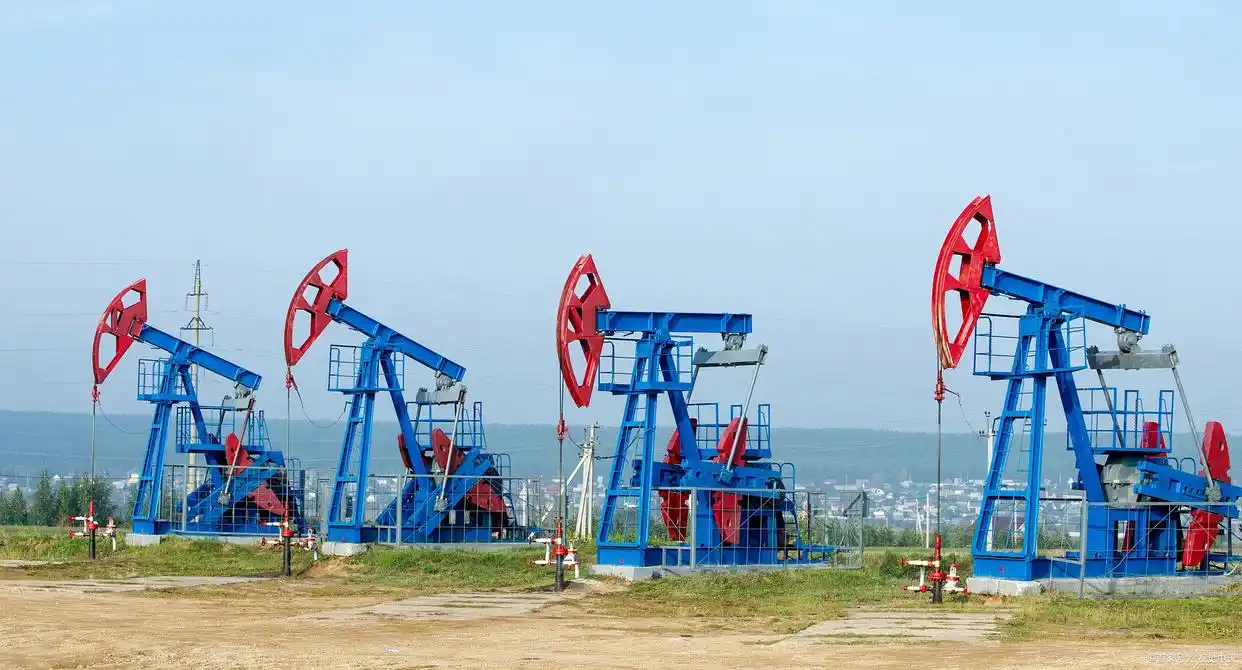
Export destinations display high geographical concentration. According to Trade and Global Market Alliance (UTW) statistics, China's total export value of oil-bearing sludge treatment equipment and technical services is projected to reach USD 1.78 billion in H1 2026, growing by 14.3% year-on-year. The Middle East and Southeast Asia markets together captured 52.6% of export volume. This distribution closely matches local oil sludge growth characteristics: aging Middle East oilfields generate scattered oil sludge streams, while rising hydrocarbon-industry activity across Southeast Asia creates strong demand for mobile and modular pyrolysis units.
Export models are also undergoing upgrading. Chinese export offerings have evolved from standalone thermal desorption equipment toward complete turnkey solution packages. Data from January–June 2026 shows the share of standalone thermal desorption equipment export value dropped to 41.5%, while integrated service-package exports climbed to 33.2%. This shift demonstrates Chinese enterprises are transforming from pure equipment vendors toward general-contracting service providers in overseas projects.
Local-content compliance requirements in the Middle East market deserve close attention. Chinese enterprises' awarded-project value in the Middle East hit USD 0.62 billion in H1 2026, up 27.8% year-on-year, yet projects face rising compliance costs arising from local-content-ratio regulations. The pure equipment-export model is therefore becoming less sustainable in the Middle East market. Enterprises offering integrated "equipment + operation + localised services" will gain stronger competitive advantages.
Global Oil Sludge Market Opportunities
- Prioritise the Middle East market for mobile pyrolysis equipment.Scattered oil sludge generation points caused by aging Middle East oilfields align well with the technical features of mobile and modular pyrolysis installations. Saudi Arabia and the UAE are accelerating mobile pyrolysis unit deployment while domestic manufacturing capacity remains limited, creating a clear market window for Chinese equipment exports and general-contracting services. Enterprises planning overseas expansion are advised to build local service teams in the Middle East or establish joint ventures with local oil-service companies to satisfy local-content-ratio compliance rules.
- Capture incremental oil sludge output from Sichuan-Chongqing shale-gas producing zones.Oil sludge demand from shale-oil development rose 22.5% year-on-year in 2025. China's Sichuan-Chongqing region serves as a core growth hotspot. Oil sludge in this area is mainly drilling cuttings and pit-fall oil sludge featuring high oil content and prominent resource-recovery value, making it suitable for continuous pyrolysis project deployment. Proactive establishment of feedstock-supply partnerships with local oil-and-gas operators is critical to capturing this incremental market segment.
- Embrace service-oriented transformation in equipment exports.The declining export share of standalone thermal desorption equipment together with the rising share of integrated service packages reflects growing overseas customer demand for turnkey solutions. Pyrolysis equipment manufacturers should adjust export strategies from "selling hardware" toward "selling overall technical capabilities," supplying maintenance training, process optimisation and digital management systems alongside physical equipment, so as to boost customer loyalty and per-project added value.
- Prioritise joint-venture cooperation with local partners when entering Middle East and Southeast Asia markets.The Middle East market faces increasing local-content compliance costs, whereas Southeast Asia carries risks stemming from incomplete regulatory frameworks. Joint-venture partnerships with qualified local oil-service or environmental-engineering firms can effectively mitigate compliance risks and accelerate market penetration by leveraging partners' local business networks.
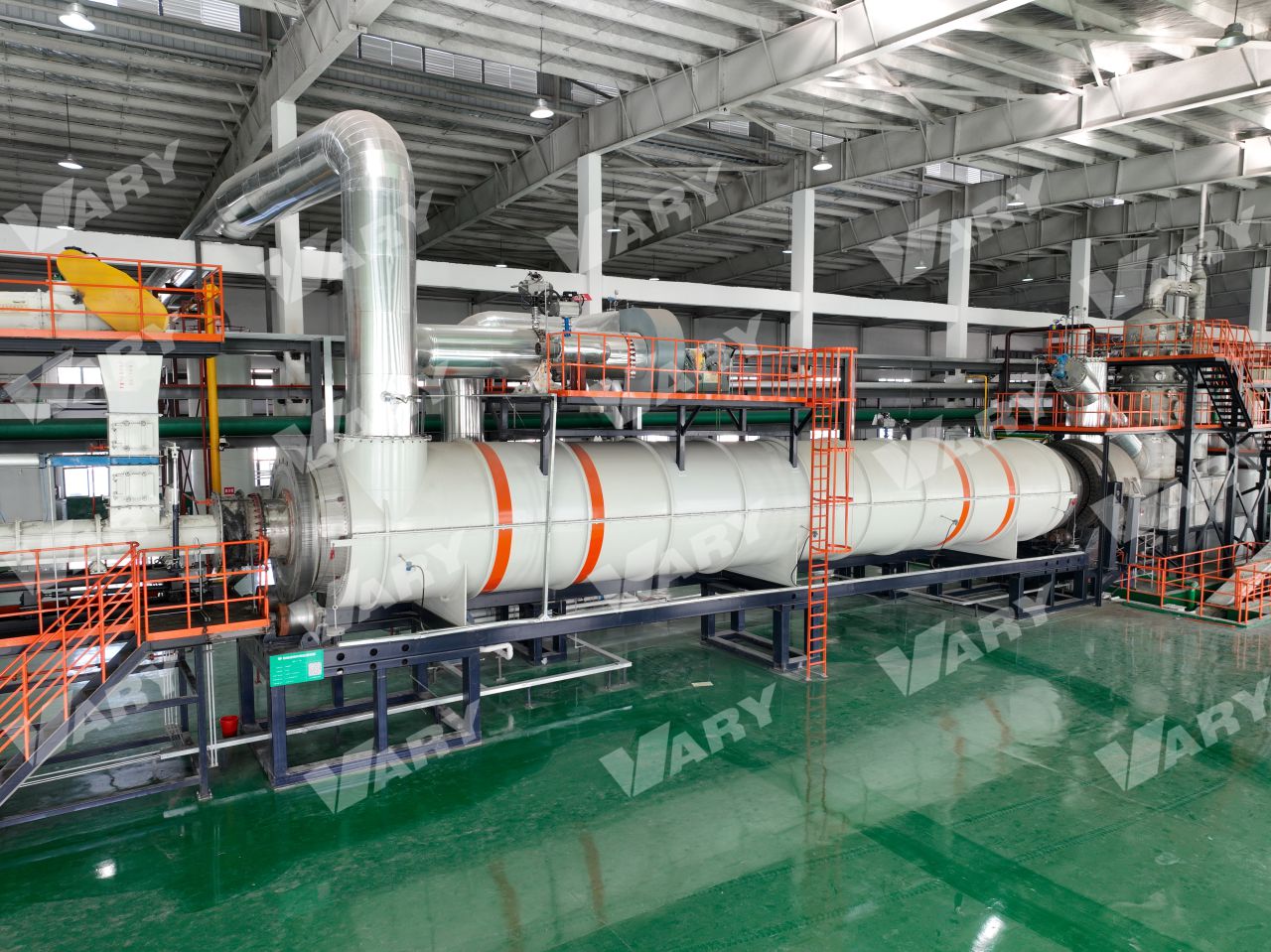
Vary Tech has accumulated 20 years of expertise in solid waste pyrolysis resource recovery. Vary Tech has developed a full product portfolio of continuous, semi-continuous and batch-type pyrolysis technical equipment. Single-set large-scale pyrolysis units can achieve a maximum daily processing capacity of 240 tonnes, while compact skid-mounted pyrolysis units are also available. Please contact Vary Tech's technical team for customised solutions.
Sources: GEP Research, In Depth Research Report on Industrial Chain of Global and Chinese Oil Bearing Sludge Treatment Industry, Global & China Oil Sludge Treatment & Disposal Market Analysis Report, dated 20 June 2026; Union of Trade & World (UTW), In Depth Analysis Report on China’s Oil Bearing Sludge Treatment Export Customs Data and Global Market Landscape, dated 24 August 2026.


