Resource recovery of waste tyres is undergoing a paradigm shift from merely "disposing of waste" toward "extracting intrinsic material value." Over the past two decades, industry stakeholders focused primarily on the question "how to dispose of end-of-life tyres." Today, the factor that determines project success or failure has evolved into "how to realise fair market value for every single component recovered from waste tyres." This transformation is driven by large-scale technical breakthroughs in pyrolysis, mature deep-processing technologies for carbon-based products, and a clear policy shift from volume-oriented waste absorption toward high-value material utilisation.
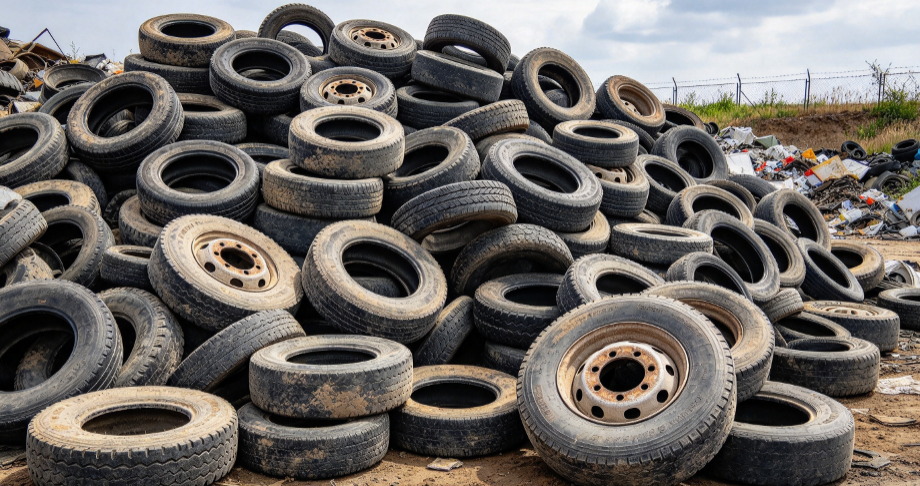
How severe is the global stock pressure of waste tyres? What problems can each existing resource-recovery pathway solve, and where are their bottlenecks? Why has pyrolysis—especially pyrolysis tightly coupled with shredding-sorting and carbon-product deep processing—become the core technical route for high-value utilisation?
One Billion Tyres Reaching End-of-Life Every Year: An Under-Estimated Global Challenge
Waste tyres are widely nicknamed "black pollution" within the industry. Unlike "white pollution," which refers to plastic waste, the waste-tyre problem does not stem from visible litter. Its physicochemical properties render waste tyres non-biodegradable, and they cannot be simply eliminated via landfilling or incineration. Tyres are manufactured by high-temperature vulcanisation and cross-linking of rubber (roughly 60%–70% by weight), steel wire, carbon black and multiple chemical additives. The material structure engineered to withstand road friction and long-term deformation makes waste tyres one of the most intractable solid wastes once their service life expires. Long-term open-air stockpiling occupies vast land areas, facilitates mosquito breeding and disease transmission, and creates severe fire hazards.
What is the true scale of global waste-tyre generation? According to GEP Research reports, global annual waste-tyre output exceeded 31 million tonnes in 2025, with approximately one billion tyres retiring from service each year. This figure keeps rising, fuelled by growing global vehicle parc, especially rapid motorisation across emerging economies.
The situation is particularly prominent in China. Statistics from Gongyan Industrial Research Institute show that China generates around 500 million waste tyres per annum in 2025, and the volume is projected to surpass 20 million tonnes by 2030. As the world's largest tyre producer and consumer, China tops the global ranking in waste-tyre generation.
Beyond rising absolute volumes, structural contradictions deserve close attention: the growth rate of waste-tyre output exceeds the expansion rate of formal disposal capacity. GEP Research indicates that China's waste-tyre recycling and utilisation rate has climbed to roughly 68.5%, which nevertheless lags behind the EU's 92% and Japan's 87%. This means a considerable share of waste tyres are still handled through informal channels: crude small-scale pyrolysis in backyard workshops, random stockpiling on urban-rural fringes, or cross-border shipments under lax supervision. The legacy stockpile of waste-tyre hazards is not diminishing, but continuously accumulating.
Four Major Waste-Tyre Resource-Recovery Routes: Achievements and Bottlenecks
To tackle the waste-tyre challenge, four mainstream resource-recovery approaches have been established: tyre retreading, reclaimed rubber, rubber powder and pyrolysis. These routes are not mutually exclusive substitutes; instead they perform distinct functions within the full life-cycle management of tyres, each with its own scope of applicability.
Tyre retreading sits at the upstream end of the waste-tyre treatment chain and delivers the best carbon-reduction performance. The process involves buffing away worn outer rubber, applying fresh rubber compound and re-vulcanising tyres with intact carcasses and moderate wear to restore serviceability. Data published in Scientific Reports shows cold retreading can achieve a carbon-reduction rate of 59.30%, the highest among the four pathways. Nevertheless, retreading suffers from narrow applicability. Whether a tyre qualifies for retreading depends on original carcass condition, service history and damage level; not all end-of-life tyres are suitable for retreading. According to the Baidu Encyclopedia entry "Tyre Treatment," the global average ratio of new tyres versus retreaded tyres stands at approximately 10:1, while China's ratio reaches 26:1. The low retreading rate arises from both technical factors (tough operating conditions causing heavy carcass damage in China) and market perception (consumers hold safety-related doubts towards retreaded tyres).
Reclaimed rubber accounts for the largest share of waste-tyre processing volume in China. Industry analysis from cninfo360 estimates that around 55% of domestic waste tyres are processed via reclaimed-rubber technologies. The core principle of reclaimed rubber is to break the three-dimensional cross-linked network of vulcanised rubber through devulcanisation, restoring plasticity so that reclaimed rubber can partially replace virgin rubber for rubber-goods manufacturing. This route features high technical maturity and broad downstream adoption, yet faces two structural constraints. First, reclaimed rubber cannot fully match the performance of virgin rubber, imposing an upper limit on blending ratios. Second, conventional high-temperature high-pressure dynamic devulcanisation generates secondary waste-gas pollution and explosion risks; several developed economies have gradually phased out domestic reclaimed-rubber production. The future of reclaimed-rubber technology lies not in capacity expansion, but in cleaner processes and improved product quality.
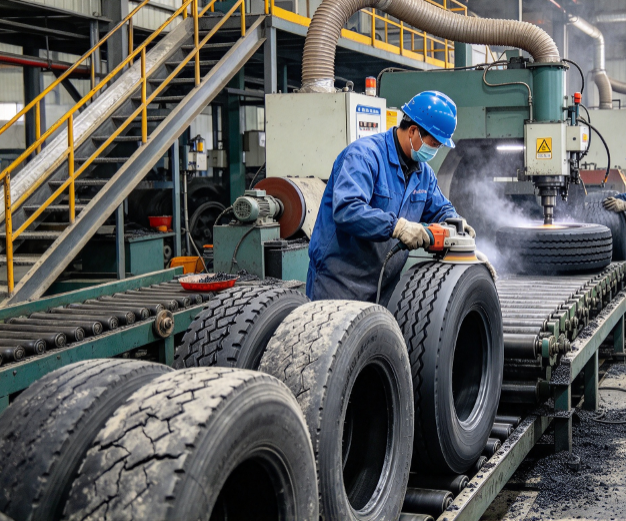
Rubber-powder technology mechanically shreds and grinds waste tyres into rubber powder of varied particle sizes, directly applied in plastic-rubber running tracks, modified asphalt, waterproof rolls and other construction-material products. The processing workflow is relatively straightforward with manageable energy consumption, yet bottlenecks appear in low product added value. When used for asphalt modification, rubber powder suffers poor compatibility with asphalt, high viscosity of composite modified asphalt and unsatisfactory storage stability. More fundamentally, rubber-powder-based applications barely utilise the carbon-black fraction (30–35% of tyre mass), since carbon black remains embedded as filler inside rubber powder and cannot be separately extracted for value-added utilisation.
Pyrolysis is the only one among the four routes capable of decomposing all tyre components. Under oxygen-free or micro-oxygen conditions at 450–600 °C, polymeric rubber chains undergo thermal cracking to yield four product streams: pyrolysis oil, pyrolytic carbon black, steel wire and non-condensable gas. From a resource-recovery-efficiency perspective, pyrolysis enables molecule-level recovery: carbon-hydrogen elements in rubber are converted into fuel-grade oil and gas; carbon black is released from the rubber matrix as an independent product; steel wire can be directly fed into steel-making furnaces. This all-component-recycling potential theoretically grants pyrolysis a higher value ceiling unavailable to the other three pathways.
Still, pyrolysis carries prominent challenges. It relies far more heavily on upstream pre-treatment and downstream deep-processing than competing technologies. Particle size, residual steel-wire content and fibre fraction of feedstock fed into reactors directly affect cracking uniformity and product quality. If crude pyrolytic carbon black produced by pyrolysis skips deashing, modification and granulation, its market value falls far below virgin carbon black and may only serve as low-grade filler. While the technical feasibility of pyrolysis is well proven, commercial viability hinges on synergistic optimisation of shredding-sorting precision and depth of carbon-product deep processing.
Pyrolysis Share Rising from 12% to 21%: The Commercial Inflection Point
Among the four routes, pyrolysis has registered the fastest growth over the past five years.
According to GEP Research, global waste-tyre output surpassed 31 million tonnes in 2025. The share of waste tyres treated by pyrolysis jumped from 12% in 2019 to 21%, representing over 7.4 million tonnes of annual processing volume. China follows a similar trend at a slightly slower pace: GEP Research data records China's 2025 pyrolysis processing volume at roughly 2.8 million tonnes with a market value of approximately 1.22 billion US dollars, accounting for 26% of the global market.
Two sets of driving forces underpin this growth. On the policy side, the EU's End-of-Life Tyre Circular Economy Directive sets a 35% pyrolysis-treatment target for 2030. China's 2025 revised implementing rules for the Solid Waste Pollution Prevention and Control Law introduce simplified EIA procedures for waste-tyre pyrolysis projects and a 70% VAT refund upon collection for qualified projects. On the technical side, single-line capacity of continuous pyrolysis reactors has been upgraded; over 85% of global new pyrolysis capacity adopts continuous-type pyrolysis technology. Equipment scaling and standardisation are transforming pyrolysis from small-scale pilot projects into replicable industrial installations.
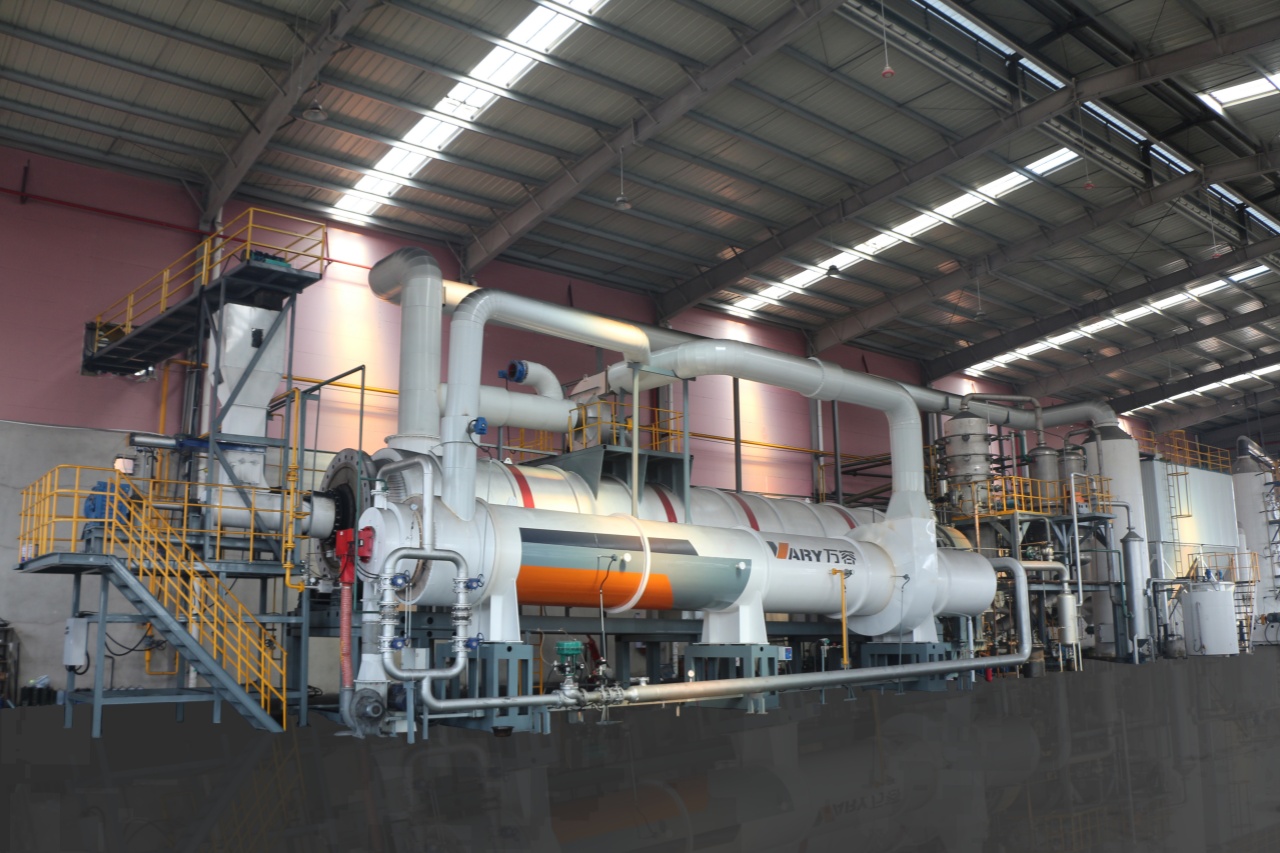
Nevertheless, industrial maturity of pyrolysis shows notable structural imbalance. GEP Research gives typical product mass distribution: pyrolysis oil 40–45%, pyrolytic carbon black 30–35%, steel wire 10–12%, non-condensable gas 8–10%. Market prices for pyrolysis oil are relatively transparent; steel-wire recycling channels for steel-mill remelting are well-established; non-condensable gas can supply heat for plant operations. Carbon black, however, represents the weakest link in value realisation across the whole industrial chain. Average market price of pyrolytic carbon black stood at around 3,100 RMB per tonne in 2025. Although the share of high-value modified carbon black used as tyre reinforcing filler has risen to 15%, overall penetration remains low.
This demonstrates that project economics for pyrolysis facilities are highly dependent on carbon-black deep-processing capacity. A pyrolysis plant producing only crude carbon black can merely sell carbon-black output at low-grade filler prices, severely squeezing profit margins. By contrast, deep-processing lines equipped for deashing, surface modification and granulation can multiply the market value of carbon black generated from the same batch of waste tyres. Carbon-product deep-processing is not an optional bonus for pyrolysis projects; it constitutes a decisive factor determining whether projects can cross the break-even threshold.
Policy Quantitative Target-Setting and Next-Stage Industrial Logic
As reported by China Reform News, the 15th Five-Year Plan for Circular-Economy Development, issued by the National Development and Reform Commission, incorporates for the first time a quantified national top-level target: to achieve 12 million tonnes of waste-rubber recycling and utilisation by 2030. Qi Xuezhi, Secretary-General of the Rubber Resource Recycling Branch of the China Rubber Industry Association, offers noteworthy interpretation: the 12-million-tonne target no longer pursues pure volume expansion. Instead it prioritises "quality improvement, efficiency gains and high-value utilisation," shifting the core orientation from "making waste utilisable" toward "utilising waste well, precisely and for high-value output." This policy signal makes clear that the next-phase focus of waste-tyre resource recovery lies not in higher processing throughput, but in higher output value.
Amid the transition of waste-tyre resource recovery from basic disposal toward high-value utilisation, Vary Tech has 20 years of experience in solid-waste resource recovery and delivers full-chain service capabilities covering waste-tyre shredding-sorting, waste-tyre pyrolysis and carbon-product deep processing. Relevant equipment and solutions have been industrially deployed in multiple projects across South Korea, China and other regions. In 2026, Vary Tech's self-developed first-of-its-kind vacuum-type waste-tyre pyrolysis equipment was exported to South Korea. It produces high-quality pyrolytic carbon black characterised by high purity, well-developed pore structure and good suitability for modification and granulation. The equipment supports South Korea's high-value waste-tyre recycling technologies and helps local manufacturers get prepared for the EU Ecodesign for Sustainable Products Regulation (ESPR) scheduled to take effect in 2028.
Follow Vary Tech for more systematic solutions for high-value waste-tyre utilisation.
Data Source Notes
1.GEP Research, 2026 Global & China Waste Tyre Pyrolysis Industry Industrial Chain and Value Chain Analysis Report: data on global and hinese waste tyre output, pyrolysis penetration ratio, processing volume, policies, technologies, product distribution and product prices.
2.Gongyan Industrial Research Institute, 2026 Analysis on China’s Waste Tyre Output, Supply and Consumption: China’s waste tyre output and 2030 forecast.
3.Scientific Reportsjournal: cold retreading carbon reduction rate data.
4.cninfo360 industry analysis: reclaimed rubber processing share within China.
5.China Reform News report 15th Five Year Plan: Critical Window Period for Waste Rubber Circular Utilisation: 15th Five Year Plan targets and interpretation by Qi Xuezhi.


