Hazardous wastes cover a wide range of categories. The National Catalogue of Hazardous Wastes (2025 Version) specifies 46 hazardous waste categories, and wastes under different codes vary drastically in physical form, chemical composition and hazardous characteristics. Waste generators face concrete practical questions on a daily basis: which disposal technology is suitable for the wastes we produce? Can pyrolysis be adopted? For disposal facility operators, the questions are more direct: after investing in pyrolysis lines, which materials can sustain stable operation, deliver volume reduction and resource recovery, and generate reasonable returns?
A key point must be clarified upfront: hazardous waste codes serve only as a primary screening index; they cannot be used alone to judge whether a given waste is suitable for pyrolysis. Even under the same waste code, materials from different plants or processes may differ markedly in oil content, moisture, ash, calorific value, chlorine, sulfur and heavy metals.
This article focuses on the compatibility logic between waste codes and pyrolysis technology, with detailed analysis of the pyrolysis feasibility of major categories including HW08, HW49 and HW11. The aim is to provide a practical assessment framework—one that identifies "premium feedstocks" suitable for pyrolysis while avoiding "disposal pitfalls" that may cause corrosion, coking, safety incidents or environmental non-compliance.
Three Core Dimensions for Rapid Screening
Pyrolysis is not a universal solution for all hazardous wastes. To determine whether a waste is suitable for pyrolysis, start with three screening dimensions.
Dimension 1: Sufficient Organic Content and Calorific Value
The essence of pyrolysis is thermal cracking of organic substances under oxygen-free or near-oxygen-free conditions, producing condensable oil/gas, non-condensable gas (NCG) and solid residues. According to the Technical Guidelines for Pollution Prevention and Control of Solid Waste Recycling (HJ 1091-2020), pyrolysis is mainly applicable to solid or liquid wastes containing crackable organic components.
The higher the organic proportion and calorific value, the more favourable the conditions for stable oil/gas production and energy recovery.
However, there is no universal threshold—such as "organic content must exceed 40%"—that applies to all hazardous wastes. The real issue is the overall energy balance: how much usable oil/gas can the material generate, how much moisture must be evaporated, how much ash must be heated, and can the pyrolysis gas cover part or all of the system's heat demand?
If the material consists largely of moisture and inorganic ash—such as certain electroplating sludges, metal-finishing sludges, or acid/alkaline residues—pyrolysis typically offers little resource-recovery advantage and instead increases energy consumption.
Dimension 2: Material Form Suitable for Stable Feeding and Heat Transfer
Pyrolysis equipment imposes clear requirements on material morphology.
For solids, consider particle size, flowability, bulk density and tendency to tangle. For semi-solids such as oil sludges and filter cakes, evaluate viscosity, adhesion and the feasibility of screw conveying or pumping. For liquids, prioritise flash point, volatility and feed-rate control.
Dehydration is especially critical for high-moisture sludges. HJ 1091-2020 stipulates that moisture content should be below 30% before pyrolysis. Pre-treatment such as crushing and screening should also be carried out as needed to improve material uniformity and pyrolysis efficiency.
Large metal pieces, stones, tangled materials, and overly viscous or coke-prone substances—if not properly pre-treated—can cause feed blockage, furnace wear, impaired heat transfer and even unplanned shutdowns.
Dimension 3: Controllable Impurities—Chlorine, Sulfur and Heavy Metals
Pyrolysis evaluation must consider not only "how much organic matter" is present, but also "what impurities are carried along with it."
High-chlorine materials generate hydrogen chloride (HCl) and other chlorinated compounds during pyrolysis, sharply increasing corrosion risk and flue-gas treatment load. High-sulfur materials raise the burden of H₂S, SOₓ and other pollutant controls. Materials containing mercury or other volatile heavy metals (or their compounds) may undergo gas-phase migration, transferring pollutants from the solid phase into condensed oil, dust or flue-gas cleaning systems.
What truly determines whether a batch of hazardous waste can be pyrolysed, therefore, is usually not the code itself, but:
Organic content / Calorific value + Moisture / Ash + Chlorine / Sulfur + Heavy metals + Material form.
These five data sets essentially define the degree of compatibility with pyrolysis technology.
HW08 Waste Mineral Oil and Mineral-Oil-Containing Wastes: One of the Most Mature Application Areas for Pyrolysis
HW08—waste mineral oil and mineral-oil-containing wastes—is one of the hazardous waste categories with extensive pyrolysis engineering applications and a relatively mature industrial base.
Under the National Catalogue of Hazardous Wastes (2025 Version), HW08 includes oil sludge and oil footing from petroleum extraction (071-001-08), oil-based drilling cuttings and waste drilling mud (071-002-08, 072-001-08), and floating oil, scum and sludge from oily wastewater treatment (900-210-08). Note: waste emulsions are generally classified under HW09 ("oil/water, hydrocarbon/water mixtures or emulsions"), not HW08.
Oil sludges and oil-based drill cuttings are typical pyrolysis candidates.
High Oil Content Supports Oil/Gas Recovery
Tank-bottom sludge, land-farmed sludge, refinery oily sludge and oil-based cuttings all contain a certain proportion of petroleum hydrocarbons. Upon heating, light and some heavy hydrocarbons volatilise and crack; after condensation, they yield recoverable oil, while the NCG can be recycled for process heating subject to safety and environmental requirements.
However, oil content, moisture and ash vary widely across sources, so a fixed "oil yield" figure cannot be used to judge project economics.
The meaningful engineering metric is:
Recovered oil yield = Feedstock oil content × Volatilisable/crackable fraction × Condensation recovery efficiency.
Representative sampling and analysis must be performed on incoming materials, followed by lab-scale or pilot tests to establish the relationship between different feedstocks and operating parameters.
High Ash Content Does Not Preclude Pyrolysis
Some oil sludges and cuttings have high inorganic solids content. Unlike incineration, which pursues heat release alone, pyrolysis allows inorganics to be discharged as solid residues. This gives pyrolysis a process advantage for materials that contain both significant inorganics and recoverable oil.
But high ash increases heating load and reduces oil/gas yield per unit of feed. Pyrolysis has moderate tolerance for high ash—but that does not mean higher ash makes a material more suitable.
A Common Misconception: Pyrolysis Does Not Automatically "Dewaste" Oil Sludge Residues
The Exemption Management List attached to the National Catalogue of Hazardous Wastes (2025 Version) does not contain a general exemption stating that "oil sludge residues with petroleum hydrocarbon content below 2% after pyrolysis may be managed as general solid waste."
The Catalogue clearly states that solid wastes generated after hazardous waste utilisation or disposal must be classified according to national hazardous waste identification standards. Moreover, "exemption management" does not remove the hazardous-waste status itself—it merely provides specific management exemptions for designated links under defined conditions.
Oil sludge pyrolysis projects must therefore determine the subsequent management path based on the specific hazardous characteristics of the material, the treatment process and the intended use of the residues. Reduced oil content cannot be equated with removal from hazardous-waste regulatory control.
HW49 Other Wastes: Waste Containers, Activated Carbon and Filter/Adsorption Media Offer Significant Potential
HW49 "Other Wastes" is a highly diverse category in terms of sources and composition. For pyrolysis, the materials worth prioritising are those with high organic pollutant content, recyclable substrates, or obvious volume reduction after thermal treatment.
Waste Packaging, Containers and Filter/Adsorption Media (900-041-49)
Code 900-041-49 covers "waste packaging containers, vessels, filter and adsorption media contaminated with toxic or infectious hazardous wastes."
For metal containers falling under this code and contaminated with resins, oils or other organic pollutants, thermal treatment can desorb and crack the adhered organics, leaving the metal substrate available for further recovery.
Two cautions:
First, not all oil- or solvent-contaminated drums fall under 900-041-49. For example, some mineral-oil-contaminated packaging in the Catalogue belongs to HW08. The correct code must be determined by the waste source and Catalogue definitions.
Second, post-pyrolysis metal cannot be classified as ordinary scrap steel simply because it "looks clean." Its subsequent use must still comply with hazardous-waste management requirements, project permits and applicable pollution-control standards.
The National Catalogue of Hazardous Wastes (2025 Version) does provide a specific utilisation exemption for certain waste iron oil drums under code 900-249-08: after opening, draining (no dripping), and baling/compacting, they may be used as feedstock for metal smelting in compliance with environmental standards, and the utilisation process is exempt from hazardous-waste management. But this applies to a specific code, specific conditions and a specific mode of use—it is not a general exemption for all waste drums.
Waste Activated Carbon: Focus on 900-039-49 and Related Codes
Code 900-039-49 mainly covers waste activated carbon from flue-gas and VOCs treatment, as well as from decolourisation, purification and impurity removal in chemical processing. Meanwhile, waste activated carbon from certain specific industries may fall under HW06, HW18, HW29 or other codes, so accurate classification by source is essential.
For waste activated carbon adsorbing organics such as benzene compounds, esters or ketones, thermal treatment offers two potential directions:
-
Thermal desorption or pyrolysis to remove adsorbed organic pollutants; and
-
Under appropriate conditions, partial reactivation to restore some pore structure for potential reuse.
A critical point: pyrolysis is not the same as activated carbon regeneration. Full restoration of surface area and micropore structure typically requires controlled atmosphere, temperature and activation agents such as steam or CO₂. Whether regenerated carbon can be reused must be verified by indicators including iodine number, methylene blue adsorption, specific surface area, ash content and target-pollutant adsorption performance.
For waste activated carbon with complex sources and small batch sizes, batch thermal treatment equipment offers flexible processing advantages.
Waste Filter Media
Waste filter cloth, filter media and adsorption materials contaminated with organics may also offer pyrolysis-based volume-reduction value. However, their waste codes may be HW49, or they may fall under HW06, HW08 or other categories depending on the materials they treated. Not all waste filter cloth or cartridges can be simply assigned to 900-041-49.
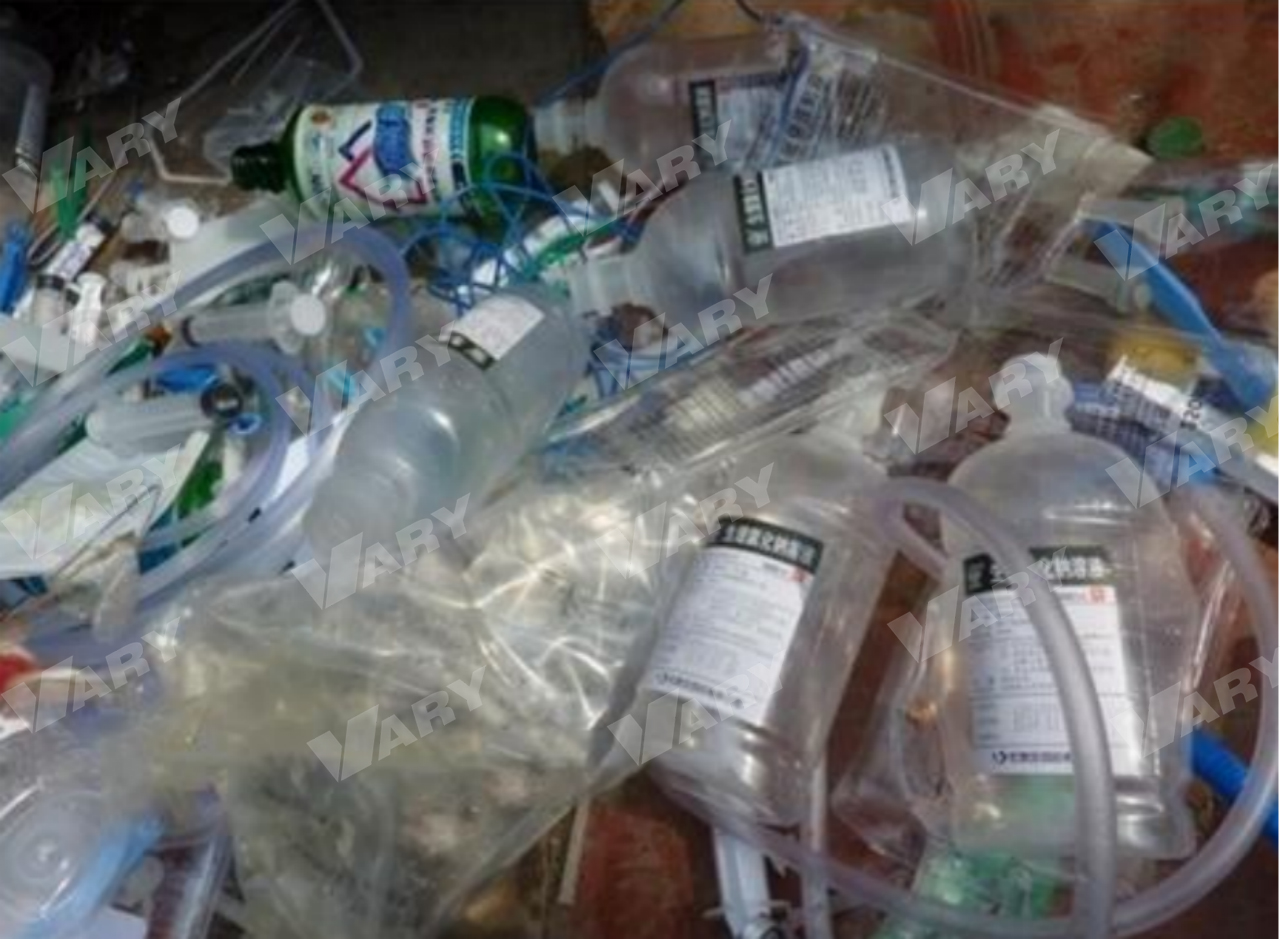
For complex HW49 materials, disposal facilities must obtain full information on feedstock sources, process history and composition before acceptance, to avoid inadvertently feeding high-halogen, high-heavy-metal or reactive substances into the pyrolysis system.
HW11 Distillation Residues: High-Organic, High-Viscosity Materials Warrant Priority Assessment
HW11 "distillation residues" come mainly from petroleum refining, coal processing and basic organic chemicals—including tars, tar sludge, and heavy distillates or kettle bottoms from numerous distillation and rectification operations.
Some of these materials have high organic content, high calorific value and considerable resource-recovery potential, making them high-priority candidates for pyrolysis evaluation.
But HW11 is equally diverse internally. Some residues rich in hydrocarbons and heavy organics are suitable for further thermal cracking; others may contain large amounts of chlorinated organics, reactive compounds or difficult impurities and are not suitable for conventional pyrolysis equipment.
The main engineering challenge for this category is usually high viscosity and coking tendency. Materials with poor ambient-temperature flowability require insulated silos, heat-traced lines, forced screw feeders or high-viscosity pumping systems. Furnace design—including internal structure, temperature profile, residence time and material disturbance—must also be optimised to reduce coking risk.
HW11 residues, therefore, cannot be simply regarded as "ideal continuous-pyrolysis feedstock." For high-viscosity, coke-prone materials, the choice between continuous and batch pyrolysis should be based on tests including softening point, carbon residue, viscosity-temperature curves and thermogravimetric analysis (TGA).
Other Hazardous Wastes with Pyrolysis Potential Beyond HW08, HW49 and HW11
HW13 Organic Resin Wastes
This category includes waste resins, adhesives, sealants and ion-exchange resins. Their common feature is high organic-polymer content, which can yield oil/gas fractions and carbonaceous residues upon pyrolysis—so a basic technical foundation exists.
For ion-exchange resins containing heavy metals, particular attention must be paid to heavy-metal enrichment in solid residues and potential gas-phase migration of certain elements during pyrolysis.
HW06 Waste Organic Solvents and Solvent-Containing Wastes
For waste organic solvents with direct recovery value, distillation/rectification routes should be evaluated before pyrolysis. The more suitable candidates for pyrolysis within HW06 are high-boiling residues, kettle bottoms and waste filter/adsorption media that cannot be economically distilled—for example, codes 900-405-06 and 900-407-06.
The priority logic for HW06 is therefore:
Solvents recoverable by distillation → recover first. Residuals with high organic content but not economically distillable → evaluate for pyrolysis.
HW02 and HW03: Pharmaceutical Wastes and Expired/Obsolete Drugs
HW02 covers distillation and reaction residues, waste filter media, and discarded products/intermediates from pharmaceutical manufacturing. HW03 includes expired, deteriorated, substandard or obsolete drugs from sales and use.
Some high-organic residues from these categories are technically amenable to pyrolysis. However, pharmaceutical wastes are often compositionally complex, with stricter requirements for destruction of active pharmaceutical ingredients, secondary-pollutant control and downstream product fate.
HW02 and HW03 are therefore better defined as "materials requiring case-by-case verification," not as broadly ideal pyrolysis feedstocks.
HW12 Dye and Coating Wastes
Waste paints, inks, paint sludges and certain coating wastes contain resins, solvents and other organics with measurable calorific value, making some candidates suitable for pyrolysis evaluation.
The main risk comes from inorganic components—pigments, additives and heavy metals. Pyrolysis does not make lead, chromium, cadmium or other heavy metals "disappear"; it may concentrate them in solid residues or dust. Pollution-control systems must be designed around the specific elemental migration pathways.
Which Hazardous Wastes Are Not Suitable for Direct Pyrolysis?
The following categories are generally not ideal feedstocks for conventional pyrolysis systems and require caution—or outright exclusion.
High-Chlorine and Halogenated Organic Wastes
PVC, highly chlorinated organics and certain halogenated distillation residues can generate large amounts of HCl and other acid gases upon heating, severely increasing corrosion and flue-gas treatment loads. For chlorinated materials, dioxins and other persistent organic pollutants must also be rigorously controlled during pyrolysis-gas combustion and flue-gas cooling.
There is no universal national threshold such as "chlorine above 3% = prohibited." Treatability must be assessed case by case based on chlorine form and content, equipment materials, acid-gas removal capacity and flue-gas cleaning system design.
High-Explosive and Strongly Reactive Materials
Certain organic peroxides, explosives and other substances that can decompose violently upon heating are not suitable for direct feeding into conventional pyrolysis furnaces. The fundamental prerequisite for hazardous-waste pyrolysis is controllable thermal stability and material compatibility. For materials with unknown reactivity, DSC, TG/DSC and compatibility evaluations must be performed before any industrial-scale trials.
High-Moisture, Low-Organic Materials
If the material consists mainly of water and inorganic salts, most of the pyrolysis heat will be consumed by moisture evaporation and ash heating, driving up unit energy consumption sharply. Certain electroplating sludges, inorganic metal sludges and acid/alkaline residues are generally not advantageous feedstocks for pyrolysis.
For sludges, HJ 1091-2020 explicitly requires moisture content below 30% before pyrolysis—underscoring that dewatering is a key determinant of economic viability.
Mercury-Containing and Volatile-Heavy-Metal Materials
Pyrolysis does not eliminate heavy metals. On the contrary, under high-temperature conditions, mercury and certain other heavy metals (or their compounds) may volatilise and redistribute, carrying pollutants into the condensation system, dust or flue-gas cleaning residues. For such materials, dedicated recovery, stabilisation or other targeted treatment technologies should be prioritised over general-purpose pyrolysis.
The "Flexibility" Advantage of Batch Pyrolysis in the Hazardous-Waste Sector
Hazardous-waste treatment centres typically face a reality of many waste types, many batches, small individual batch volumes and significant composition fluctuations. This is precisely where batch pyrolysis equipment excels.
Its basic operating logic is:
Batch feeding → sealed pyrolysis → oil/gas extraction → cooling → residue discharge → cleaning (as needed) → next batch.
Different heating ramps, peak temperatures and hold times can be applied to different materials, offering high process flexibility for multi-category, small-batch hazardous-waste treatment.
For example, HW49 waste packaging and filter/adsorption media, waste activated carbon, and certain HW12 and HW13 organic wastes can all be processed with operating conditions tailored to their properties.
That said, "high flexibility" does not mean random mixing of different wastes. Actual operations must strictly adhere to the waste categories and throughput limits authorised by the hazardous-waste operating permit. Material-compatibility analysis is mandatory, and furnace-cleaning/process-switching protocols must be established based on the pollutant profiles of different batches.
From an investment standpoint, batch pyrolysis units are typically smaller in single-line capacity, with flexible start-up, shut-down and changeover capabilities, and good tolerance for feedstock fluctuations. They are therefore well suited as supplementary or flexible thermal-treatment units for integrated hazardous-waste disposal facilities.
The business model should not be simplistically framed as "selling pyrolysis oil for profit." Instead, it is:
Disposal service fees + Volume-reduction value + Energy-recovery value + Potential material-recovery value.
Whether the pyrolysis oil, gas and solid residues can be used on-site or sold off-site depends on further compliance with product classification, hazardous-waste status, environmental regulations and applicable quality standards.
Practical Project Example
A hazardous-waste disposal project in central China is equipped with six sets of batch anaerobic pyrolysis equipment from Vary Tech. According to project data, the licensed hazardous-waste processing capacity is 73,700 tonnes/year, covering waste mineral oil, waste acid, oil/water and hydrocarbon/water mixtures or emulsions, organic solvents, dye/coating wastes, organic resin wastes and other categories. Among these, the annual treatment capacity for hazardous-waste packaging containers is 1 million units; for mineral-oil-containing wastes, 1,800 tonnes; and for waste emulsions, 10,000 tonnes.
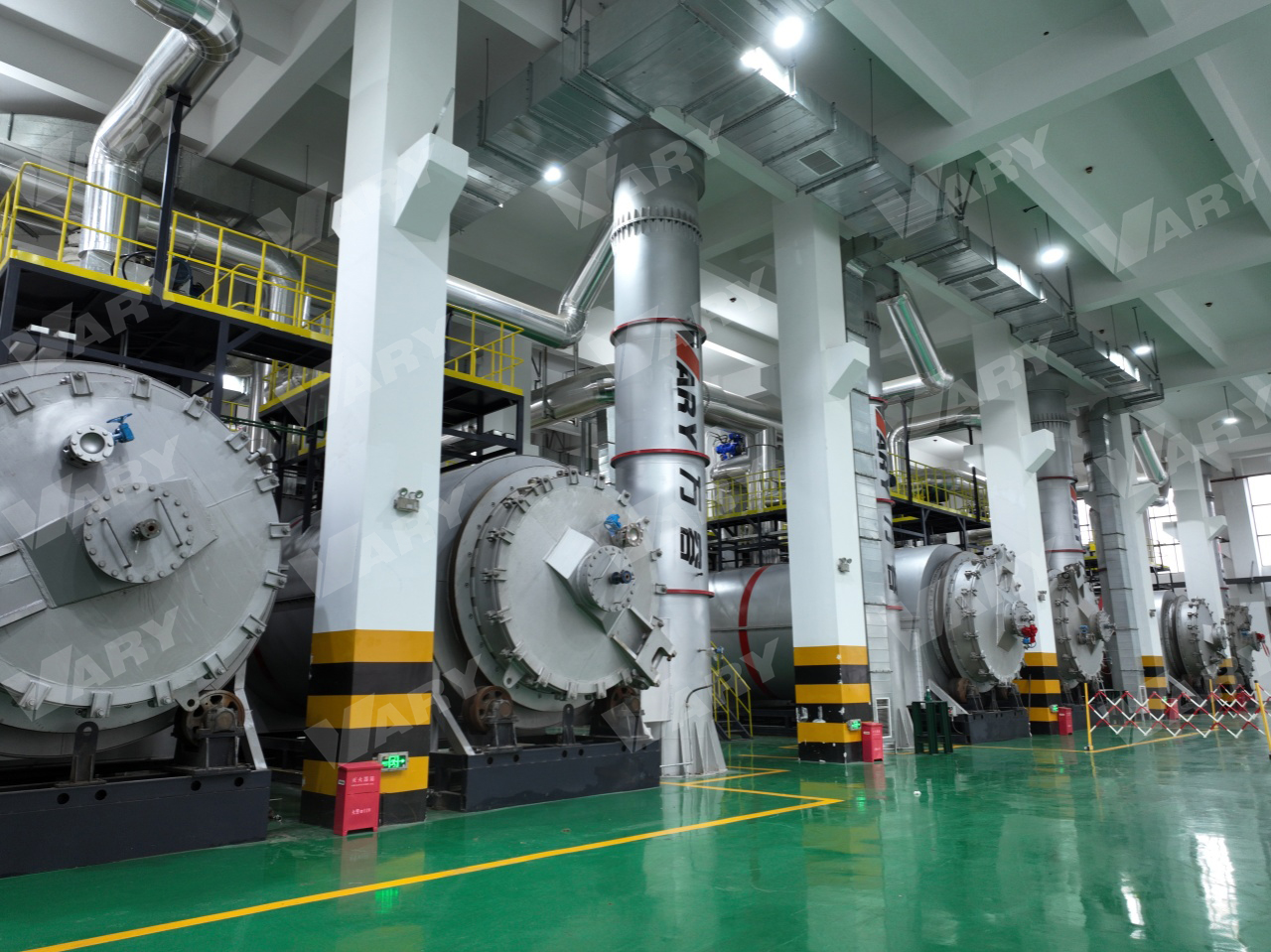
This case illustrates that the core value of batch anaerobic pyrolysis equipment lies not in processing a single material type, but in providing a highly adaptable thermal-treatment unit for integrated hazardous-waste treatment centres—backed by complete pre-treatment, flue-gas cleaning and hazardous-waste management systems.
Are Pyrolysis Residues Still Hazardous Waste? This Is the Most Commonly Misunderstood Question
Whether residues from hazardous-waste pyrolysis remain hazardous waste cannot be determined by a single leaching-toxicity test and a simplistic "below the limit = general solid waste" judgment.
The General Standard for Identification of Hazardous Wastes (GB 5085.7-2019) provides clear rules for solid wastes generated after hazardous-waste utilisation or disposal:
-
Solid wastes derived from hazardous wastes that exhibit only corrosivity, flammability or reactivity—if identified as no longer hazardous after utilisation or disposal—may be excluded from hazardous-waste management.
-
Solid wastes generated during the utilisation processof toxic hazardous wastes—if identified as no longer hazardous—may be excluded from hazardous-waste management.
-
However, unless otherwise stipulated by relevant laws, regulations or standards, solid wastes generated after disposalof toxic hazardous wastes remain hazardous wastes.
-
Stricter rules apply to wastes with infectious hazardous characteristics.
In practice, therefore, projects must first determine whether the pyrolysis process is legally classified as "utilisation" or "disposal" in that specific context. The identification scheme must then be designed in accordance with the GB 5085 series and HJ 298—not based solely on petroleum-hydrocarbon content or a single leaching indicator.
Flue-Gas Compliance: Another Lifeline for Pyrolysis Systems
Although pyrolysis operates under oxygen-free or near-oxygen-free conditions, the NCG generated is typically either recycled for system heating or sent to combustion treatment.
HJ 1091-2020 clearly stipulates that pyrolysis gas should be prioritised for recycling as fuel; if not recyclable, it must be incinerated before release. Pyrolysis equipment must also have good sealing and automatic temperature control to prevent gas leakage.
The specific emission standards applicable to a hazardous-waste pyrolysis project depend on the treatment process, the project's environmental-impact assessment (EIA), its pollutant-discharge permit, and local ecological-environment requirements. Where a unit qualifies as a hazardous-waste incineration facility or is otherwise required to comply with hazardous-waste incineration standards, the Standard for Pollution Control on Hazardous Waste Incineration (GB 18484-2020)—and any stricter local requirements—shall apply. This standard sets limits on particulates, SO₂, NOₓ, HCl, HF, heavy metals, dioxins and other pollutants.
A truly reliable hazardous-waste pyrolysis system, therefore, is not merely a "pyrolysis furnace"—it must include:
Feedstock analysis and blending → Pre-treatment → Sealed feeding → Pyrolysis → Oil/gas condensation → NCG utilisation/combustion → Acid-gas and particulate removal → Regulated management of solid residues.
Building a Practical Pyrolysis-Compatibility Judgment Framework Using Hazardous-Waste Codes as an Index
Hazardous-waste codes are an entry point for understanding waste sources and hazards—but they are not a feedstock checklist for pyrolysis equipment.
What truly determines whether a hazardous waste can enter a pyrolysis system is its underlying material properties:
Oil content, organic content, calorific value, moisture, ash, chlorine, sulfur, heavy metals, thermal stability, viscosity and coking tendency.
From an engineering perspective, hazardous-waste feedstocks for pyrolysis can be divided into three tiers:
Tier 1—Priority evaluation:
Certain HW08 oil sludges and oil-based drill cuttings, and certain high-organic HW11 distillation residues.
Tier 2—Conditionally compatible:
Certain HW49 waste activated carbon and filter/adsorption media, HW12 dye and coating wastes, HW13 organic resin wastes, and HW06 high-boiling residues.
Tier 3—Proceed with caution or principally exclude from conventional pyrolysis systems:
High-chlorine wastes, high-moisture/low-calorific-value wastes, highly reactive/explosive wastes, high-mercury wastes and other special categories.
For waste generators, adopting the right pyrolysis technology can simultaneously achieve organic-pollutant destruction, waste volume reduction, and partial recovery of oil, gas and materials. For disposal operators, the real core competency is screening materials, formulating blends, controlling feed, optimising pyrolysis conditions, and ensuring that all oil, gas and solid products have clear, compliant downstream destinations.
For any new hazardous-waste material, therefore, the most reliable approach is never to rely solely on the waste code. The proper sequence is: conduct full compositional analysis, then thermogravimetric analysis and lab-scale pyrolysis trials, and—if needed—pilot-scale verification.
Vary Tech operates a dedicated pyrolysis-process laboratory capable of performing material characterisation, lab-scale pyrolysis trials and process-parameter validation for different hazardous-waste samples, providing a data foundation for equipment selection and industrial-process design. For evaluation of specific waste materials, please contact the Vary Tech technical team.


